


A Kia Sonet night drive Dausa enquiry should start with a precise question: can the regular driver comfortably see, identify and operate the things needed on their usual evening journeys? A daytime showroom visit can answer some of this, but it cannot establish how a particular driver experiences the vehicle in low light. Use this guide to separate a parked controls walkthrough, a permitted representative drive and the questions that still need another appointment.
Prices, offers, finance terms, stock, waiting periods, delivery timing and feature availability can change. Confirm all of these with Rajesh KIA before booking. An evening appointment, a particular demonstrator or a specific lighting feature is not promised here; ask the dealership to confirm what can currently be arranged for the exact Sonet configuration you are considering.
Start a Kia Sonet Night Drive Dausa Request With Your Routine
Write down two ordinary journeys you expect to make after daylight fades. Describe the setting rather than assuming every Dausa road has the same conditions: a well-lit street, an unfamiliar turn, a residential parking space or an approach with changing ambient light. Add who normally drives, who accompanies them and which parts of the journey already cause uncertainty in the present car.
This creates a useful appointment brief. You are asking to evaluate a personal visibility and control requirement, not to prove that one vehicle is universally better at night. Share the brief through the Kia Sonet Dausa enquiry page. Ask whether the dealership can provide a suitable supervised appointment and representative vehicle. If it cannot, keep the night-use question open rather than treating a daylight loop as an answer.
Match the Lighting Equipment to the Quoted Vehicle
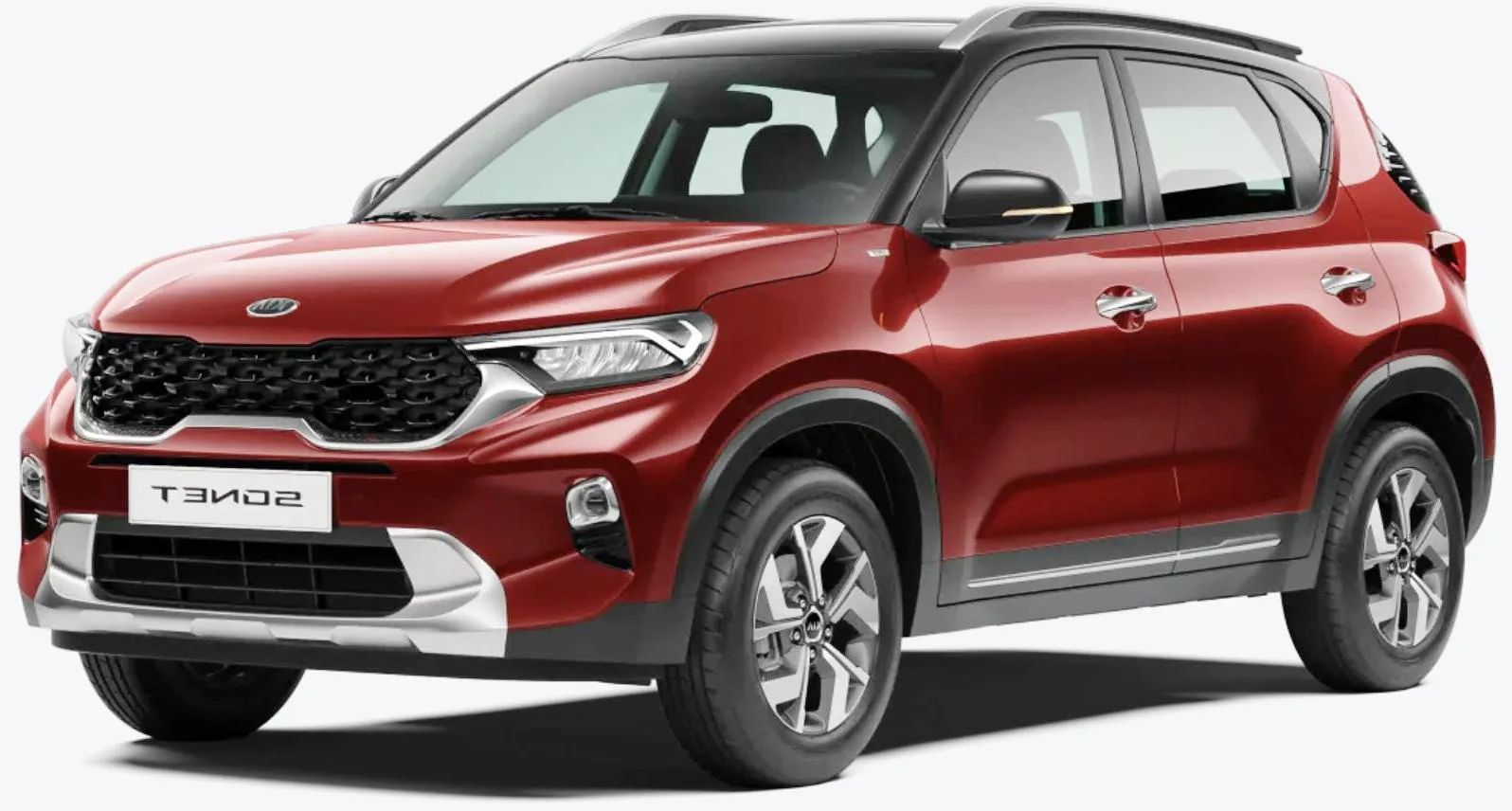
Use the current Kia India Sonet page to prepare questions and the official Sonet specifications to identify the current configuration. Then ask the advisor to confirm the equipment on the actual demonstrator and on the vehicle being quoted. A photograph of one trim does not establish the equipment on another.
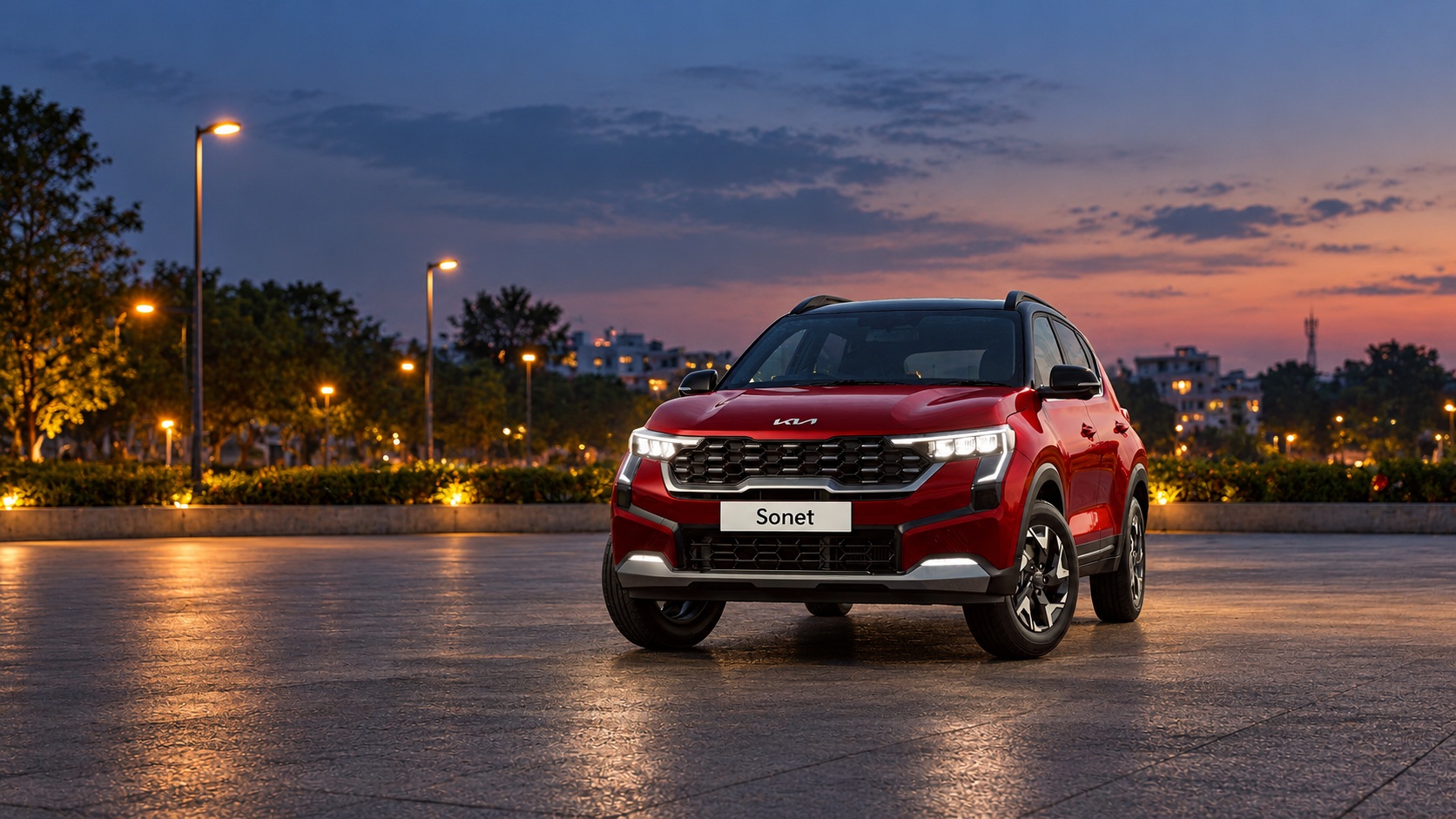
Record the trim, powertrain, transmission and relevant lighting or visibility equipment in two separate columns: demonstrator and proposed purchase. Mark any difference explicitly. Do not transfer an observation about a lamp, mirror, display or assistance feature to the quoted car unless that equipment is confirmed to match. The illustrative hero image is not evidence of a particular trim, local stock or lighting performance.
Complete the Parked Walkthrough Before Moving
With dealership staff present and the vehicle safely stationary, establish the driver's normal seating position. If you usually wear prescribed glasses for driving, use them for the observation. Ask the advisor to explain the relevant controls and indicators using the vehicle's current instructions. The buyer's task is to understand the layout, not to experiment with unfamiliar settings while driving.
Check whether the driver can identify the necessary information from that normal position. Consider display legibility, reflections in the windscreen, mirror adjustment and how easily the relevant controls can be found. Make any permitted adjustments while parked. Ask staff to demonstrate anything unclear; do not assume an automatic function is present or that it behaves the same across configurations.
- Confirm the demonstrator's identity and list equipment differences from the quote.
- Ask for a parked explanation of lighting controls and their visible indicators.
- Set a comfortable seating and mirror position before observing reflections and display readability.
- Write down unresolved questions before deciding whether a moving assessment is appropriate.
Agree What a Supervised Drive Can Actually Answer
If a suitable appointment is available, let the dealership determine the permitted route, conditions and supervision. Explain the two ordinary journeys from your brief and ask which aspects can reasonably be represented. An unfamiliar or unlit route should not be requested simply to create a demanding demonstration. Stop or defer the assessment if staff consider conditions unsuitable or the driver feels uncomfortable.
Keep the observation narrow. The driver concentrates on driving; an accompanying observer can note agreed impressions when appropriate. Do not operate a phone, take notes, change unfamiliar settings or attempt a feature demonstration while driving. There is no need to stage glare, obstruct a view, switch off required lighting or test the limits of any assistance system. Questions about operation belong in the stationary walkthrough.
Use an Observation Sheet, Not a Lighting Score
A useful record describes what was seen, under what conditions and on which configuration. It should not assign a scientific beam-distance, brightness or safety score from a brief drive. The same driver's impression can change with road lighting, weather, seating position and familiarity. That is a reason to document conditions, not a reason to invent a precise measurement.
| Question | Record | Keep open when |
|---|---|---|
| Could the driver read essential information? | Normal seating position, ambient light and any parked adjustment | The assessment was only inside a brightly lit showroom |
| Were mirrors and forward view comfortable? | The specific reflection or adjustment concern | The relevant condition never occurred on the permitted route |
| Were the controls understood? | Staff explanation and the driver's parked readback | A control or indicator still needs clarification |
| Does the observation apply to the quote? | Matching equipment or a named configuration difference | The demonstrator uses different relevant equipment |
Separate Driver Feedback From Passenger Feedback
Ask the driver for one concrete concern and one satisfactory observation after the vehicle is parked. Avoid replacing those notes with a general statement such as "the lights looked good." A precise note might identify an unread indicator, an uncomfortable reflection or a control that became easy to find after explanation. Each leads to a different follow-up question.
Passengers can describe their own seating and cabin-lighting experience, but should not score the driver's ability to see the road. If more than one household member will drive regularly, each needs an appropriate opportunity to understand the relevant controls. One person's confidence does not settle another person's visibility concern. Keep their notes separate before discussing a shared shortlist.
Decide Between Shortlist, Recheck and Defer
Shortlist the configuration when its identity is clear, the parked walkthrough is understood and the observations relevant to your routine are satisfactory. Request a recheck when one specific question remains, naming the equipment or condition needed to answer it. Defer when the relevant demonstrator or appointment is unavailable. These outcomes are more useful than forcing a purchase decision from an incomplete assessment.
The verified local branch for this discussion is Rajesh KIA Dausa. Confirm the visit arrangements through the Rajesh KIA contact page before travelling. Ask for the next step to be written against the exact configuration, including any remaining questions. Only then request the current quotation; a satisfactory visibility assessment does not confirm price, stock or delivery timing.
FAQ: Kia Sonet Night Drive Dausa
Does a Kia Sonet night drive Dausa request guarantee an evening appointment?
No. Ask Rajesh KIA Dausa to confirm current appointment availability, the representative vehicle and the permitted assessment. This guide does not promise a particular slot or route.
Can a daytime drive settle all my low-light questions?
No. It can help with seating, mirrors and a parked controls explanation, but it does not establish your experience in conditions that were not observed. Record those questions for follow-up.
Can I use another trim's lighting demonstration to choose my Sonet?
Only for aspects confirmed to match. Ask the advisor to identify relevant differences and leave configuration-specific observations open until the proposed purchase is properly represented.
Request a Kia Sonet Night Drive Dausa Discussion
Bring your two-journey brief, demonstrator-versus-quote equipment notes and any unresolved visibility question. Contact Rajesh KIA Dausa about a Kia Sonet night drive Dausa assessment. Confirm what can be arranged before visiting, and base the next purchase step on the exact current vehicle and written dealership response.
Comments (0)
Leave a Comment